Disclosure: This article contains affiliate links. If you make a purchase through them, we may earn a small commission at no extra cost to you.
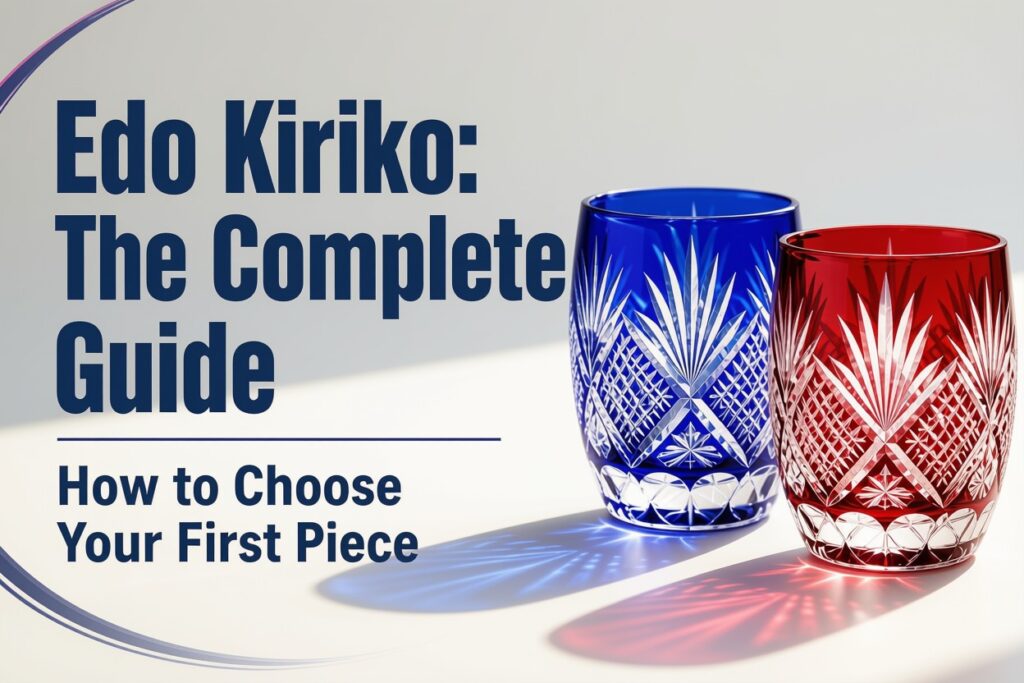
Have you heard of Edo Kiriko and wondered what makes these glasses so special? Made by hand in Tokyo, Edo Kiriko is a traditional Japanese cut glass that’s drawing admirers from all over the world.
In this guide, we’ll walk you through everything you need to know: its history, how it’s made, the most popular patterns, and where to buy an authentic piece.
Edo Kiriko isn’t cheap, but it’s the kind of thing you buy once and keep for a lifetime. Fill it with whisky, sake or even iced coffee, and it sparkles beautifully in the light. It’s a simple way to add a small moment of luxury to your everyday life.
How It Began: A Glass Merchant in 1834
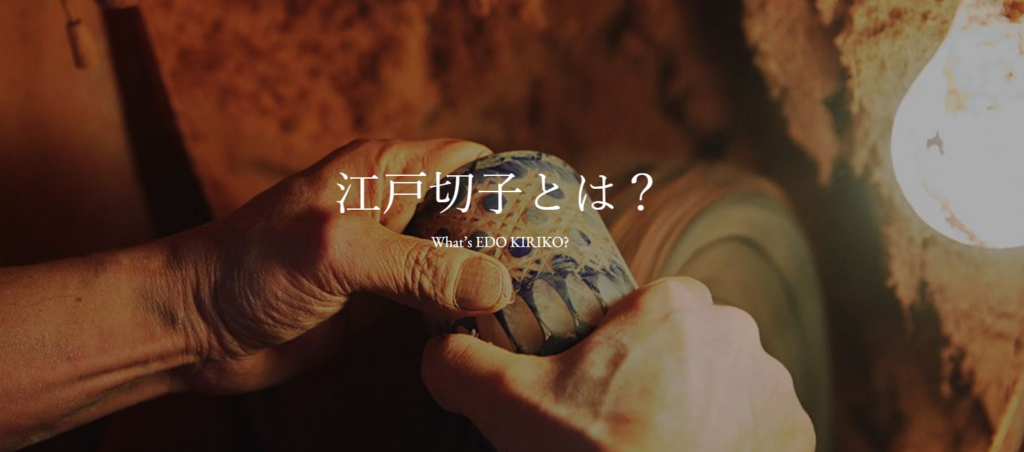
“Edo” is the old name for Tokyo, and “kiriko” means “cut facets.” The craft traces its origins to 1834. In the Odenmacho district of Edo (today’s Nihonbashi, in central Tokyo), a glass merchant named Kagaya Kyubei began carving patterns into the surface of glass using a fine abrasive powder called kongōsha, or emery.
At the time, Japan was largely closed to the outside world, but small amounts of European glassware still arrived through foreign trade. Kagaya is said to have been inspired by these imported cut-glass pieces and set out to create something similar with Japanese designs. His early work was cut into clear, colorless glass, and it found eager buyers among Edo’s merchants and townspeople.
This is what makes Edo Kiriko different from Japan’s other famous cut glass, Satsuma Kiriko, which was created under the sponsorship of a powerful feudal lord in southern Japan. Edo Kiriko was a craft of ordinary city people, and it has been handed down, unbroken, from one generation of artisans to the next.
How It Evolved: Western Techniques and a Golden Age
The next turning point came after Japan opened to the West. In 1881, a glassworks in Shinagawa, Tokyo, invited a British cut-glass specialist, Emmanuel Hauptmann, to teach Japanese craftsmen. More than ten artisans trained under him, learning Western cutting and polishing techniques. It was around this time that the method of cutting through a thin layer of colored glass became established, creating the bold look that defines Edo Kiriko today.
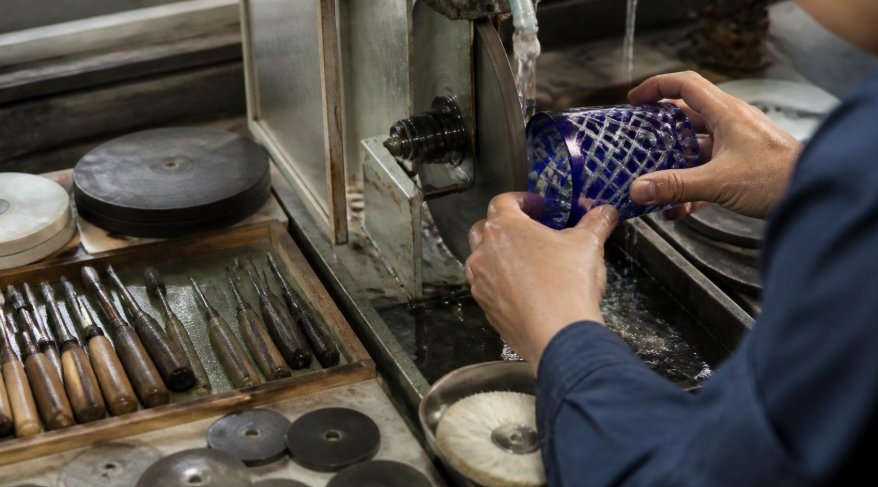
In the early 20th century, better materials and improved polishing methods raised the quality even further. By the 1920s and 1930s, cut glass had become one of the most fashionable crafts in Japan, used for everything from tableware to lamps.
Its value has since been officially recognized. Edo Kiriko was designated a Traditional Craft of Tokyo in 1985 and a Traditional Craft of Japan by the national government in 2002. Today, “Edo Kiriko” is also a registered trademark: only pieces cut by hand, mainly with rotating wheels, and made within a designated area centered on Tokyo can carry the name. Many of the workshops are still found in the old downtown neighborhoods of Koto and Sumida.
Why It’s So Beautiful: How Edo Kiriko Is Made
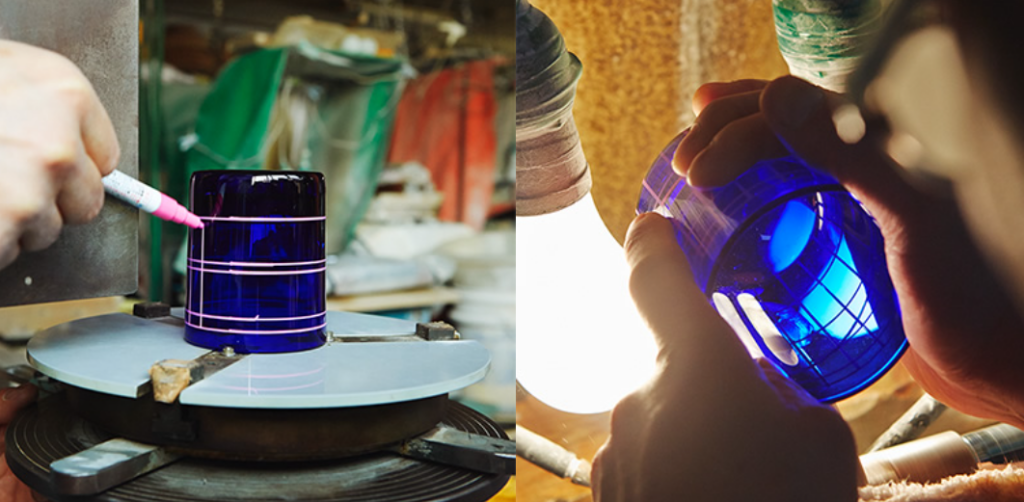
Most colored Edo Kiriko starts as a “cased” glass: a thin layer of colored glass fused over clear glass. The artisan cuts through the color to reveal the clear glass underneath. Because the colored layer is thin, the lines between color and clear are crisp and sharp, and every cut acts like a tiny prism.
What’s remarkable is how little the artisan draws beforehand. Only a simple grid of guidelines is marked on the glass. Everything else is cut by eye and feel, using water-cooled diamond wheels that spin at high speed. The artisan first cuts the main grooves, then adds finer and finer lines, smooths the surfaces with whetstones, and finally polishes each cut until it shines. One slip can ruin the piece, so a single glass can represent years of training.
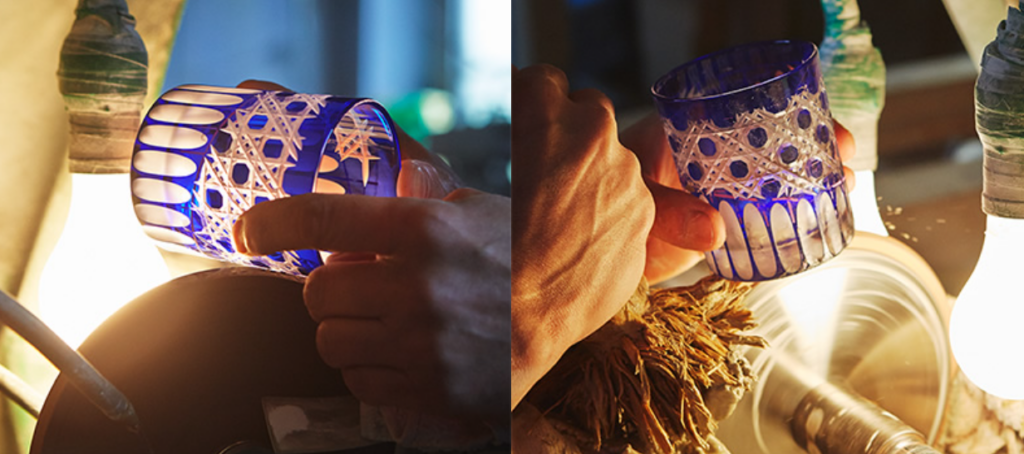
The base glass matters too. Crystal glass is heavier, sparkles more and rings clearly when ice touches it, which makes it ideal for fine whisky. Soda glass is lighter, tougher and more affordable, a good choice for everyday use.
Three Classic Patterns to Know
Edo Kiriko patterns come from traditional Japanese designs, and many carry a wish for good fortune. Here are three you’ll see often.
Yarai and Nanako: protection and prosperity
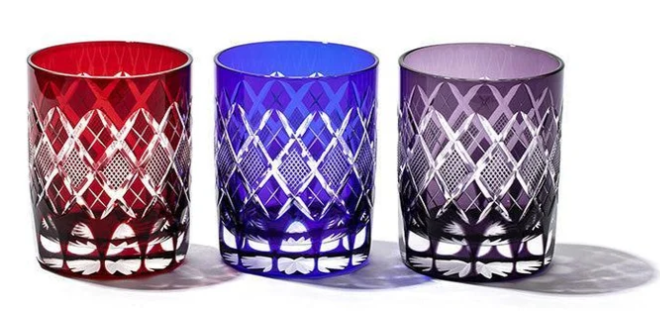
Yarai is a crosshatch pattern modeled on the bamboo fences once built around Japanese homes. Because a fence keeps out intruders, it symbolizes protection from misfortune. Nanako, or “fish roe,” is a dense field of tiny cuts that look like fish eggs or shimmering scales. It represents prosperity, and it gives the glass a pleasant grip. The pattern is so beloved that July 5 is celebrated as “Edo Kiriko Day,” a play on reading 7-5 as “na-na-ko.” Together, the two make a classic, approachable first piece.
👉 See the Yarai Nanako Old-Fashioned Glass on BECOS
Kagome: a charm against evil
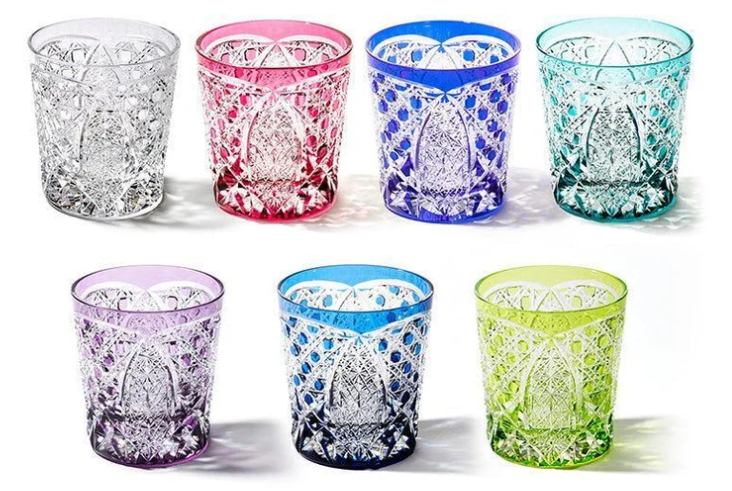
Kagome is based on the weave of a bamboo basket. Because its pattern resembles a chain of six-pointed stars, it has long been considered a charm to ward off evil. Its thin, precise lines demand real skill, so it’s often found on higher-end pieces. It’s frequently paired with kiku-tsunagi (linked chrysanthemums), a combination that wishes the owner both protection and a long life.
👉 See the Kikutsunagi and Kagome Old-Fashioned Glass on BECOS
Kiku: the chrysanthemum
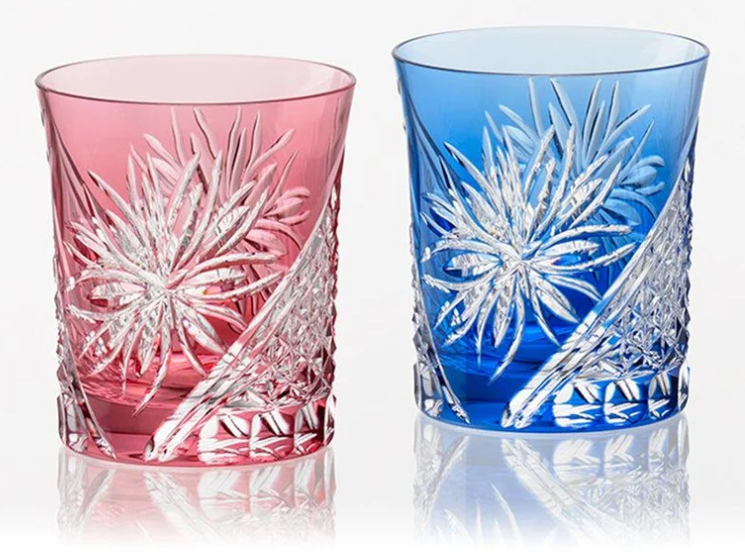
The chrysanthemum is a symbol of longevity and nobility in Japan. Cut into the base of a glass, its radiating petals light up like a kaleidoscope when you pour a drink. It’s a lovely choice for a milestone birthday, a wedding or a retirement gift.
👉 See the Edo Chrysanthemum Pair of Whiskey Glasses on BECOS
👉 See the full Edo Kiriko collection here
Where to Buy Authentic Edo Kiriko: BECOS
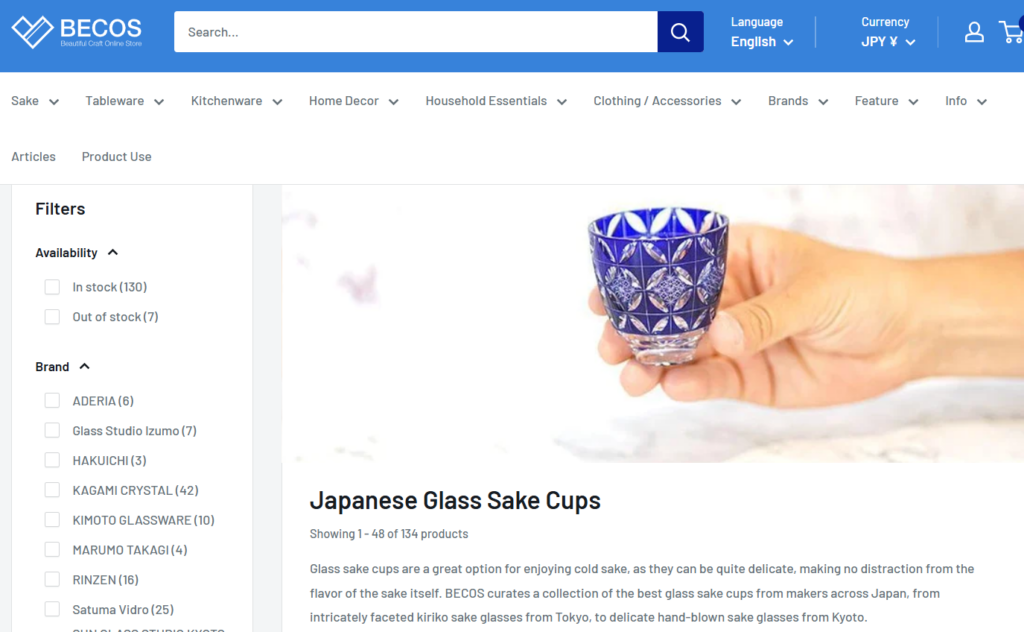
If you live outside Japan, one of the easiest ways to buy genuine Edo Kiriko is BECOS, a Japanese online store specializing in traditional crafts. It carries pieces from well-known makers such as Kagami Crystal and Tableau (Taburo Kobo), with English descriptions of each workshop and its story. Its selection ranges from sake cups to whisky glasses, wine glasses and larger decorative pieces.
Here’s a quick overview of shipping and payment.
| Details | |
|---|---|
| Shipped from | Japan, by airmail (Japan Post or FedEx) |
| Delivery time | Most orders arrive within 1–3 weeks |
| Standard shipping | About 6–12 business days |
| Shipping cost | $25 to North America, Europe, Oceania and Africa; $15 within Asia |
| Free shipping | On orders of $250 or more |
| Express shipping | 2–5 business days (available at checkout) |
| Tracking | Tracking number sent once your order ships |
| Payment methods | Visa, Mastercard, American Express, JCB, PayPal, Apple Pay, Google Pay |
| Import duties | Vary by country; U.S. customers should expect duties on most orders |
One final tip: Edo Kiriko isn’t dishwasher- or microwave-safe. Wash it gently by hand, and it will sparkle for a lifetime.